















Leaders Digest examines the views and decisions of executives and industry leaders through reporting, interviews, and opinion-led analysis.
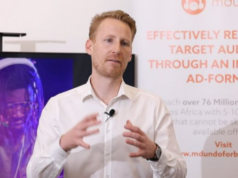
In a powerful new industry statement, Godwin Tom, the Managing Director of Sony Music Publishing (SMP) West Africa, has issued a clarion call to recognize songwriters as the indispensable architects of the global music business, encapsulating his core thesis in a stark equation: “No Song = No Star.”
Tom, who heads the publishing giant’s regional operations from Nigeria, argues that while cultural and commercial attention naturally focuses on the performer, the entire industry is built upon a more foundational element. “Without the blueprint, there is no building,” he writes. “Without the song, there is no industry.”
Positioning his role within SMP’s global framework, Tom states his mandate is twofold: to expand the business in West Africa and, crucially, to act as a champion for the architects, the songwriters, the composers, and the producers who craft the blueprint and melodies of the hits the world dances to.
The executive directly confronts what he sees as a pervasive misunderstanding in the local market, where publishing is often narrowly viewed as being about advances and administrative deals. He contends this view severely undervalues its true function.
“Publishing is more, way more,” Tom asserts. “It is asset protection.” He reframes it as a dual-purpose financial vehicle for creators: a mechanism for immediate earnings tied to a sound recording’s success and a source of lifelong, multi-channel revenue.
In a memorable formulation, Tom describes a robust publishing career as a creator’s bank and your pension, emphasizing its role in providing both immediate liquidity and long-term, sustainable wealth from a catalog of intellectual property.
The core mission of SMP West Africa, according to Tom, is to ensure equitable value travels back to the composer wherever their work is used. “We aren’t just collecting royalties; we are creating opportunities,” he explains. “Whether your song is played in a mall in Tokyo or a club in London, we ensure the value travels back to the creator.”
Addressing songwriters directly, Tom’s message is one of empowerment and business-mindedness: “Dear songwriters: Your pen is your power. Treat it like a business.” He stresses that to wield this power effectively, creators must be well-informed.
This belief in education underpins a notable policy from the West African office. Tom reveals that SMP opens its doors to writers even to those we haven’t signed, offering them a space to ask questions and learn more about building a sustainable career.
Tom links this writer-first philosophy directly to SMP’s position as the world’s largest music publisher by market share, revenue, and catalogue size. He attributes this dominance not merely to operational excellence but to a foundational principle: “We put our writers first!”
Looking forward, the essay outlines an ambitious roadmap for SMP West Africa in the coming year.
Tom points to several key initiatives designed to nurture talent and celebrate legacy, including The Legend’s Project, the Fusion Camp, and a pipeline of exciting signings.
These projects, he states, are part of a continued commitment to “keep our promises to our writers,” signaling an active, investment-led approach to developing the region’s songwriting ecosystem.
The statement serves as a strategic manifesto from a major global player in a high-growth market.
It signals SMP’s intent to deepen its roots in West Africa by elevating the professional and financial standing of songwriters, aiming to systematize songwriting as a premier asset class.