








Afrikona Opinion is a series featuring perspectives from industry leaders shaping the global music business.
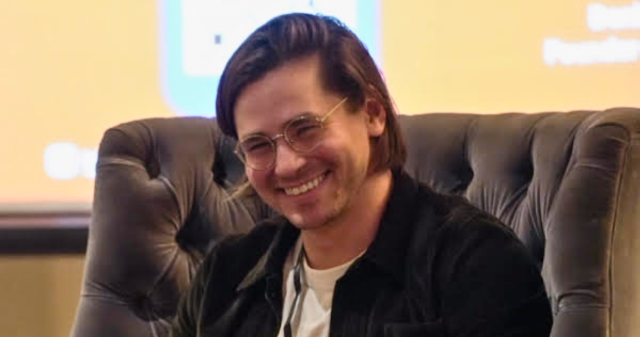
In this edition, Charlie Kaplan, Vice President of Product at Audiomack, shares a perspective informed by the company’s experience operating across global and emerging markets.
Kaplan, who oversees product strategy for the streaming platform, raises a key question about how the music industry defines value: Is restricting access to music the best way to ensure artists are paid, or can wider accessibility help create a more sustainable ecosystem?
His views are presented below.
At the annual meeting of the National Music Publishers Association in June 2025, Apple Music’s Vice President, Oliver Schusser, took a stance on how most people listen to music.
“I think it’s crazy that 20 years in, we still offer music for free,” he declared. By “we”, he meant streaming music companies writ large, but quickly pivoted to spare his own. “We’re the only service that doesn’t have a free service. As a company, we look at music as art, and we would never want to give away art for free.”
Schusser’s stand capped a decade of Apple Music’s offering: Tens of millions of songs for a tidy monthly sum. It also threw down the gauntlet at a moment of rising strife in music.
Once streaming became the dominant source of recording revenue in 2015, industry trends reversed the moribund dive wrought by Napster and have never looked downward since.
Artists who watched streaming hoover billions in subscription dollars saw their paltry payouts and raised their voices in protest, demanding better compensation. The culprit, according to Schusser, is the 77% of users who listen to music on free tiers.
As if to rally the movement to rescue artists from this peril right then and there, Schusser turned to two of the night’s awardees, pop stars Gracie Abrams and Kacey Musgraves, and proclaimed, “So I don’t understand why Gracie’s album would be available for free, or Kacey’s. It makes no sense. We don’t have a free service, we will not have one, we have no plans for one.”
Is the best way to value art and get artists paid to restrict access to the cross-section of humanity with cash to spare? This might be easy to say to the faces of large-print Coachella bookings and their courtiers, to whom subscription fees may seem a pittance (Apple Music costs $10.99 in the US and is adjusted for purchasing power parity elsewhere).
It might even be easy for Billboard, which devalued free-tier plays in its chart calculations, provoking YouTube to remove its data in protest. But subscription prices draw a red dividing line through the billions of people worldwide who have smartphones, selecting who Apple deems valuable enough to pay them and worthy enough to stream music at all.
What do the remainder do? When they don’t use streaming services, they pirate. When they use licensed streaming services, they opt for YouTube, SoundCloud, and the company I work for, Audiomack, which offer purportedly “crazy” free tiers. But from where I sit, ad-supported free tiers do the opposite of devalue music.
They provide access to music for listeners that companies like Apple Music deem undeserving. They collect dollars that subscription-only apps believe are worthless and rightfully return them to artists. These services welcome everyone, irrespective of their means.
I’ve seen this with my own eyes: Audiomack has become the largest streaming music app in Sub-Saharan Africa, with over 50 million monthly active users across some of the world’s poorest countries. People deserve to hear music, and artists deserve to get paid when they do.
Our users are hard to see from Cupertino. Listeners without spare cash to spend on subscriptions don’t appeal to the imagination of a company that sells iPhones for hundreds of dollars. But in a world with 4.88 billion smartphone users, and where half the global population lives on less than $6.85 a day, is it fair or even sane? to keep music behind a paywall?
Schusser was talking his own book onstage. Buttressing Apple Music’s business offering with a scolding moral argument lends its bottom line a patina of righteousness that I’m sure warmed the insiders and millionaires assembled at his feet.
And he is right in part: Art is valuable, artists create this value, and so artists deserve to be compensated fairly when their art is used to generate money for anyone, especially trillion-dollar companies with tens of billions of dollars of cash-on-hand.
One of the most important things a streaming service like Apple Music or Audiomack can do is efficiently collect revenue from music and disburse it to the rightful rights-holders.
But is the best way to do this to turn up our noses at money we can return from users who can’t pay an arbitrary and, for many, unattainable subscription price?
The music industry wants to make more money. Recently, there’s been a great deal of interest in mining so-called superfans, listeners willing to pay more than the prevailing subscription price for rarefied experiences and access.
But identifying the untapped financial potential above $11 per month, adjusted, begs the question of how much, for artists and the industry alike, exists below this dividing line, too.
Schusser’s doctrine threatens the inverse: How much less revenue might exist if those without purchasing power had no way to access music and, by doing so, get artists paid?
It’s easy to visualize. Think of global purchasing power as a pyramid. At the top are the fewest people with the most to spend; at the bottom, the most people with the least to spend. This is where that red line comes in. Hard subscription prices slash a boundary across the middle of that pyramid, preventing those below from listening and creating revenue that pays artists.
Free tiers open up the bottom those too young to pay, or with too little cash to spend on subscriptions, or without payment methods at all to generate revenue. Depriving listeners access to music based on their ability to pay similarly deprives artists of the money those listeners would generate if they could access a free tier. That model senselessly restricts the music economy.
Schusser’s stance on the value of art is pious but blinkered. This sanctimony crumbles in view of the billions of people his model discards. As I’ve written elsewhere, creating a structural economic restriction on art may raise its price, but making it a luxury good devalues it culturally and economically.
It makes music an exclusive club, hides it from people who don’t want to steal, and deprives artists of fair compensation when other listeners turn to piracy. Ask any artist, not only the GRAMMY nominees hobnobbing at NMPA, but also the uninvited strivers getting started: Do only the wealthiest people on earth deserve to hear and pay you? Can someone be too poor to be your fan?
Or maybe Schusser is making a tacit admission: Apple Music’s subscription-only model, prohibitively expensive on a global scale, is only possible in a world where others serve its undesirables. A world where, when Apple Music tested true exclusivity, the piracy that once tanked the music industry returned in force. A world where Apple Music never caught up to Spotify’s subscriber numbers, despite its free tier, and was passed by another free-tier platform, YouTube Music, in 2023.
Streaming is a flawed system. It delivers billions of dollars for artists who still feel underpaid. It enables hundreds of millions of listeners around the world to buy subscriptions that untold more can’t afford.
It has defined the decade-long growth of recorded revenues, yet the music industry still makes less money, adjusted for inflation, than it did before the advent of Napster in 1999. It’s the best of times, it’s the worst of times. But the greatest good streaming music does is draw the shortest line between artists and listeners, irrespective of means. You’d be crazy to think otherwise.