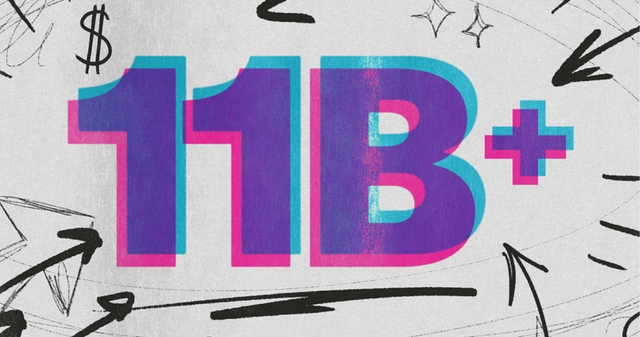
Spotify announced today that it paid out more than $11 billion to the music industry in 2025, a figure it states represents the largest annual payment to music creators from any single retailer in history.
The disclosure was made in a company blog post authored by Charlie Hellman, Spotify’s Head of Music. According to the post, the 2025 payout grew by more than 10% compared to 2024. The company also noted that independent artists and labels accounted for roughly half of all royalties distributed.
Spotify estimates that its platform now accounts for approximately 30% of global recorded music revenue. It claims its payout growth of over 10% in 2025 outpaced other industry revenue sources, which it says grew closer to 4%, positioning Spotify as the primary driver of industry revenue growth last year.
We Believe That As Fans Go Deeper Into An Artist’s World On Spotify, That Connection Shouldn’t Live Only Online. Showing Up To Support An Artist In Person Has Always Been One Of The Strongest Forms Of Fandom, And One Of The Most Important Income Streams For Artists.
The company stated that more artists are now generating over $100,000 per year from Spotify alone than were being stocked on record store shelves at the height of the CD era.
It attributes this growth to an expanding global subscriber base of more than 750 million people paying for music streaming across all services, alongside price increases.
Spotify says it pays out approximately two-thirds, or nearly 70%, of its music-related revenue to rights holders. The remaining third is reinvested into platform innovation, which it argues drives more subscribers and, consequently, higher industry payouts.
Looking ahead to 2026, Hellman outlined the company’s top priority as helping new artists and music “cut through the noise” amid an environment of over 100,000 new song releases daily. The strategy is built on four key initiatives.
First, the company plans to enhance artist storytelling and video, arguing that human connection becomes more valuable as AI-generated content proliferates. This includes bringing more contextual information into the listening experience and leveraging video for authenticity.
Second, a focus on artist identity and trust will lead to new systems for artist verification, song credits, and identity protection. Spotify stated this is a direct response to AI being exploited by bad actors to flood services with low quality content and divert royalties.
Third, Spotify emphasized the role of human editorial curation, stating that placement on hand selected editorial playlists can be a turning point for developing artists. The company plans to create new programs in 2026 where editorial support leads to more sustained momentum for emerging talent.
Fourth, the company will build on its live events integration, having helped artists generate more than $1 billion in ticket sales to date through partner integrations. New features are planned to help more artists convert listeners into ticket buying fans.
The announcement frames the current industry climate as one of “unprecedented competition alongside unprecedented opportunity,” with Spotify’s stated goal being to create clearer, more reliable paths for artists to reach audiences and sustain careers.