















Afrikona Opinion is a series featuring perspectives from industry leaders shaping the global music business.
Africa’s recorded music market is expanding at a pace that has drawn sustained global attention. According to the International Federation of the Phonographic Industry (IFPI), Sub-Saharan Africa has delivered consecutive years of double-digit growth, crossing the $100 million mark and continuing upward.
Streaming accounts for the majority of this growth, supported by rising smartphone penetration, improving internet access, and a young, digitally native population.
Within this expansion, two genres have become central to the region’s global presence: Afrobeats from Nigeria and Amapiano from South Africa.
Both genres have moved beyond domestic success to achieve international scale, driven by social media platforms, diaspora audiences, and global playlisting across services such as Spotify and Apple Music. Consumption patterns show that a significant share of listening for African repertoire now takes place outside the continent.
This growth in demand has not been matched by equivalent development across key industry systems. The result is a market where cultural influence is rising faster than structural control.
Genre Growth Without Full Market Capture
Nigeria and South Africa remain the largest recorded music markets in Sub-Saharan Africa. Nigeria’s Afrobeats ecosystem has produced globally recognized artists, while South Africa’s Amapiano has become a dominant regional and increasingly international sound.
However, the commercial outcomes of this growth reveal a gap. While consumption is rising globally, revenue capture within the continent remains relatively limited.
A large share of streams, views, and engagement occurs outside Africa, where monetization is governed by international platforms and licensing frameworks.
This creates a structural imbalance in which:
- Demand is global
- Monetization is external
- Local retention of value is constrained
The absence of fully developed regional monetization systems continues to limit how much of this growth translates into long-term economic scale within African markets.
Label Ownership and Control Dynamics
The acquisition of Mavin Records by Universal Music Group illustrates increasing global investment in African music. Mavin Records has been central to the development of contemporary Nigerian pop, making it one of the most influential labels in the region.
While such transactions provide capital, infrastructure, and global reach, they also highlight a key gap in the African music business: limited local ownership at scale. As leading catalogs and label systems become integrated into multinational structures, elements such as rights ownership, revenue participation, and strategic control shift accordingly.
The challenge is not the presence of international investment, but the limited number of locally scaled entities capable of retaining ownership while competing globally.
Reliance on External Distribution Infrastructure
Independent distribution has enabled many African artists to access global markets. Companies such as EMPIRE, led by Ghazi Shami, have expanded operations across West Africa, providing distribution and marketing services that connect artists to international audiences.
This has improved access and visibility. However, it also reflects a broader dependency on external infrastructure. A significant portion of African music distribution operates through international platforms, supply chain integrations, or white-label systems.
In practical terms:
- Local companies often control artist relationships and branding
- Backend systems for delivery, rights management, and payments are externally managed
This limits the development of fully independent distribution ecosystems within the continent and reduces control over key operational layers of the business.
Fragmented Representation in Global Negotiations
Organizations such as Merlin Network provide collective bargaining power for independent labels in negotiations with digital service providers. African companies have participated in these structures, including board-level representation.
Current representation includes Bugwu Aneto-Okeke, while Michael Ugwu previously served on the board. During his tenure, Michael Ugwu consistently emphasized the need for stronger African alignment within global licensing frameworks, highlighting the challenges of fragmentation and the importance of building structures that allow African independents to negotiate with greater cohesion and scale.
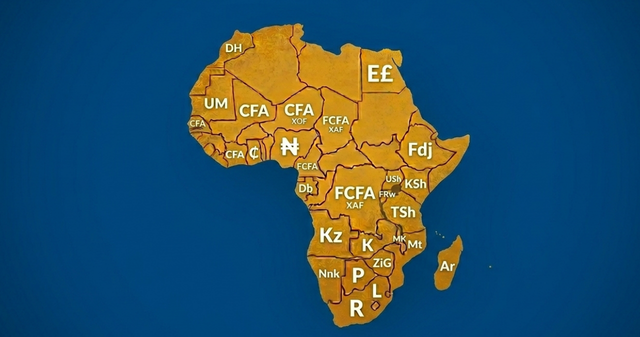
Despite this representation, the African market remains fragmented. Companies operate across different legal, economic, and linguistic environments, which limits coordinated negotiation strategies. Unlike more unified regions, Africa does not yet function as a single bloc in global licensing discussions.
This fragmentation creates several challenges:
- Reduced bargaining power with global platforms
- Inconsistent deal terms across markets
- Limited influence on global policy and pricing structures
Representation exists, but alignment remains incomplete.
Absence of a Unified Trade Body
Trade bodies play a central role in shaping industry standards, advocacy, and policy engagement. Globally, organizations such as the Worldwide Independent Network (WinForMusic) provide coordination across markets.
In Africa, while national organizations exist, there is no single continent-wide trade body with broad participation and authority. This gap affects the industry’s ability to:
- Advocate collectively on regulatory issues
- Standardize practices across markets
- Engage global partners from a unified position
The lack of a coordinated structure contributes to fragmentation and limits the region’s negotiating leverage.
Underdeveloped Publishing and Rights Systems
Publishing remains one of the least developed areas of the African music business. While collection societies operate in various countries, the broader ecosystem for rights management is inconsistent.
Key challenges include:
- Incomplete songwriter and works registration
- Limited global publishing administration
- Gaps in neighboring rights and synchronization licensing
Without robust publishing systems, a portion of royalties generated by African music, particularly internationally, is not fully collected or distributed. This results in lost revenue and reduces the long-term value of catalogs.
Catalog Ownership and Long-Term Value
Music catalogs have become a significant asset class globally, attracting investment from funds and major companies. In Africa, catalog development and acquisition remain limited in scale.
As international companies expand their presence, African repertoire is increasingly incorporated into global portfolios. While this can enhance monetization and exposure, it also highlights a structural gap: the absence of large, locally controlled catalog holdings.
This affects:
- Long-term revenue retention
- Valuation of African music assets
- Control over legacy and future exploitation of works
The development of catalog strategies within the continent remains at an early stage.
Limited Investment in Music Technology
Technology underpins nearly every aspect of the modern music business, from distribution to royalty accounting and audience analytics. In Africa, the growth of music consumption has not been matched by equivalent investment in music technology infrastructure.
Current limitations include:
- Few large-scale local platforms for rights and royalty management
- Dependence on external software and systems
- Limited venture capital focused on music-specific technology
This slows the development of independent systems and affects operational efficiency across the industry.
Gaps in Data and Market Intelligence
Data plays a central role in global music strategy, informing decisions related to marketing, touring, signing, and investment. While African artists and companies have access to platform-level analytics, broader data integration remains limited.
Challenges include:
- Fragmented data across platforms and revenue streams
- Limited tools for aggregation and analysis
- Inconsistent use of data in decision-making processes
Without comprehensive data systems, it becomes more difficult to fully understand audience behavior, optimize releases, and maximize revenue opportunities.
The African music business is defined by a clear contrast. Cultural output continues to expand globally, supported by strong demand for genres such as Afrobeats and Amapiano. At the same time, core industry systems, including ownership structures, distribution infrastructure, publishing, investment, and data capabilities, remain in development.
The gaps are not in creativity or audience growth, but in the systems that support, monetize, and sustain that growth.